
What do you do when your belief in God no longer aligns with your experience of Him? When your belief remains, but the theology built around it is collapsing.
You do not question whether God exists. That part remains strangely intact. You question everything surrounding it. You question what prayer changes, what faith is supposed to provide, and why God’s goodness seems unquestionable even when life feels unbearably cruel. You question the promises you were taught to trust, the explanations you were given for suffering, and whether hope is still faith when believing has repeatedly left you disappointed.
That is where I find myself now. I believe in God. I simply no longer know what that belief is supposed to mean.
I was raised Pentecostal, where prayer was more than something we did. Prayer was the answer. We prayed for healing, protection, direction, deliverance, favor, open doors, restored relationships, financial relief, and impossible circumstances to change. When the answer did not come, we kept praying. We trusted God’s timing, searched ourselves for anything that might be standing in the way, and held on to the belief that He was working even when we could not see it.
I have prayed that way. I have believed with my whole heart that certain situations would change because the need was real, the request was reasonable, and allowing the suffering to continue seemed to serve no meaningful purpose. I have waited with expectation, convinced that God would make a way because that was what I had always been taught He would do.
Then the answer was no.
Sometimes the no was unmistakable. Other times, silence lasted long enough to become an answer of its own. Eventually, the situation might become less painful or slightly more manageable, and that improvement was offered as proof that God had heard me. I was expected to thank Him for bringing me through, even while I was still carrying everything the experience had done to me.
That is where prayer began to change.
It stopped feeling like a place where I could safely place my hope and started feeling like the beginning of a familiar cycle. I would pray, allow myself to believe, wait for something to happen, and then try to recover when it did not. After enough disappointments, pessimism became a form of protection. Expecting very little felt safer than continuing to place my heart in the path of another no.
That does not mean I have never experienced goodness. I recognize what I have. I know my life could be harder. I am grateful for the people who love me, the roof over my head, the strength to continue, and the moments of unexpected kindness that still manage to move me. Sometimes witnessing genuine compassion brings me to tears because it reminds me that goodness still exists in the world.
In those moments, I find myself thinking, Okay, God. I see You.
Then another question rises beneath the gratitude.
Where are You here for me?
Gratitude does not erase grief. Recognizing what remains does not make what was lost insignificant. Knowing that another person is suffering more does not automatically make my own pain easier to carry. Yet faith is often presented in a way that makes honest disappointment sound like ingratitude. We are reminded to count our blessings when what we may need first is permission to acknowledge what hurts.
My husband’s faith has remained strong through circumstances that could have caused anyone to question everything. He believes deeply that God is good and that nothing bad comes from Him. When I am struggling, he listens. He becomes angry about what I am facing and wishes he could step into the situation and change it. When he reaches the limits of what he can personally do, he turns to prayer because prayer is the strongest thing he believes he can still offer.
I understand that his invitation to pray comes from love. He is not dismissing me. He internalizes his inability to fix what is happening and feels the weight of being unable to protect me from it. Prayer gives him somewhere to place that helplessness. It allows him to believe that when his own hands are tied, God’s are not.
The difficulty is that the same belief that helps him endure has begun to wound me.
He can say that the devil is busy, but I was also taught that the devil cannot do anything God does not allow. If God has authority over everything, I do not understand how every good outcome proves His goodness while everything painful is separated from Him completely. God receives the praise when relief finally comes, yet questioning why the suffering was permitted in the first place is often treated as spiritual rebellion.
Why does survival automatically become evidence of God’s goodness? Why is the fact that something eventually became bearable supposed to answer what the experience cost me? Relief does not always restore what suffering changed. Making it through something does not explain why I had to endure it.
These questions frighten me because I was taught that questioning God could place me in spiritual danger. Doubt was rarely presented as an honest part of faith. It was treated as weakness, disobedience, or an opening for the enemy. Heaven and hell were always close behind, offering eternal consequences for reaching the wrong conclusion.
My adult mind can question whether I believe in hell while the child formed in the church remains terrified that asking the question will send me there. I can examine whether some religious teachings were designed to control behavior while still fearing that God may punish me for considering it. There have been nights when those old warnings became so loud that sleep itself felt unsafe.
Fear is not always proof that something is true. Sometimes fear is evidence of how deeply something was taught.
That may be one of the hardest parts of rebuilding a belief system. The mind can change long before the body feels safe enough to follow. I can understand intellectually that questioning theology is not the same as rejecting God and still feel as though my honesty has placed me in danger.
I am also wrestling with what I was taught about goodness, salvation, and justice. I struggle to understand a system in which someone can cause tremendous harm, make the proper confession, and still be promised heaven, while a person who tries to live with compassion and integrity could supposedly face eternal punishment for being unable to believe the right doctrine.
What kind of God values certainty more than character?
These are no longer abstract theological questions for me. They affect how I understand my life, my choices, my relationships, and the suffering I once believed had a purpose. I used to think the difficult things I experienced might help me encourage someone else. If my pain could make another person feel understood, then perhaps it had not been wasted.
I am no longer sure that someone else benefiting from my survival explains why I had to suffer. An experience can give me compassion without having been assigned to me as a lesson. I can use what happened to help someone else without calling the harm necessary.
Perhaps what I am grieving most is an agreement I thought existed between God and me. I believed that if I tried to live faithfully, treated people well, helped where I could, prayed sincerely, and continued trusting, life would eventually meet me with some measure of fairness. I did not expect perfection. I knew that good people suffered. Still, I believed faithfulness would matter in a way I could eventually recognize.
Now I am beginning to wonder whether that agreement came from God at all, or whether it was created by people trying to make an unpredictable life feel safer.
If prayer does not guarantee intervention, what does it do? Is it meant to change circumstances, or only help us survive circumstances that will remain unchanged? If the purpose of prayer is to change me rather than the outcome, why was I taught to expect doors to open, mountains to move, and miracles to happen?
I do not have an answer, and I am no longer willing to force one simply so my faith can look intact from the outside. Maybe my anger is grief. Maybe I am mourning the version of God I expected to protect me, reward faithfulness, and eventually make the suffering make sense. Maybe the theology is collapsing because it could no longer hold the full truth of my experience.
My belief remains, but belief by itself no longer answers the questions surrounding it. I am standing between the faith that formed me and whatever faith may eventually become mine, trying to separate God from everything I was taught to expect from Him.
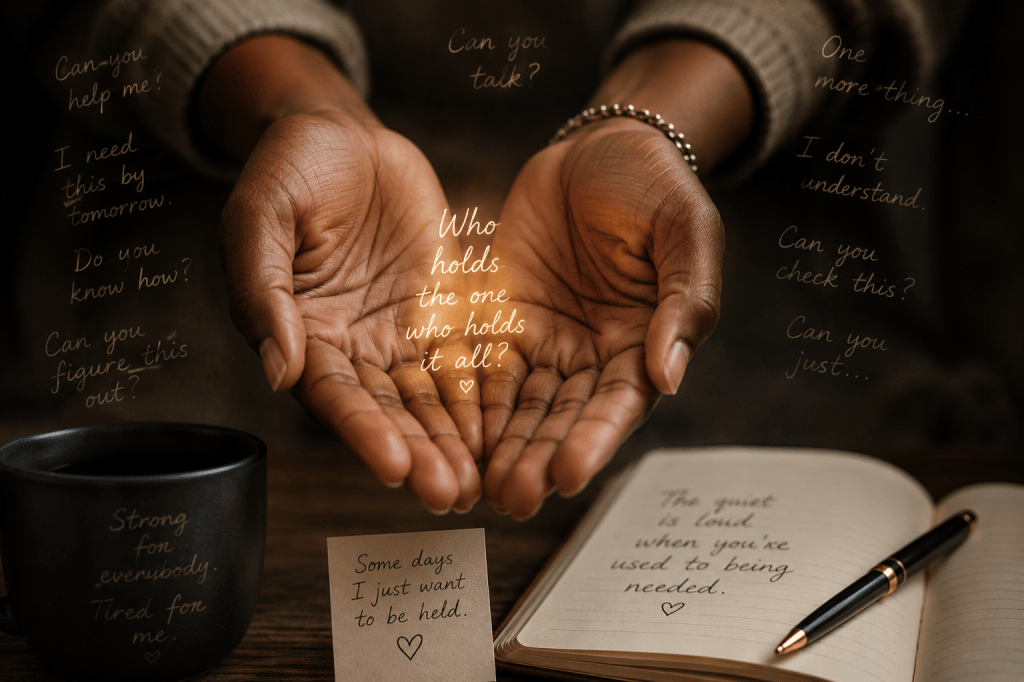
So what do you do when you still believe in God, but prayer no longer feels like hope?







Leave a comment